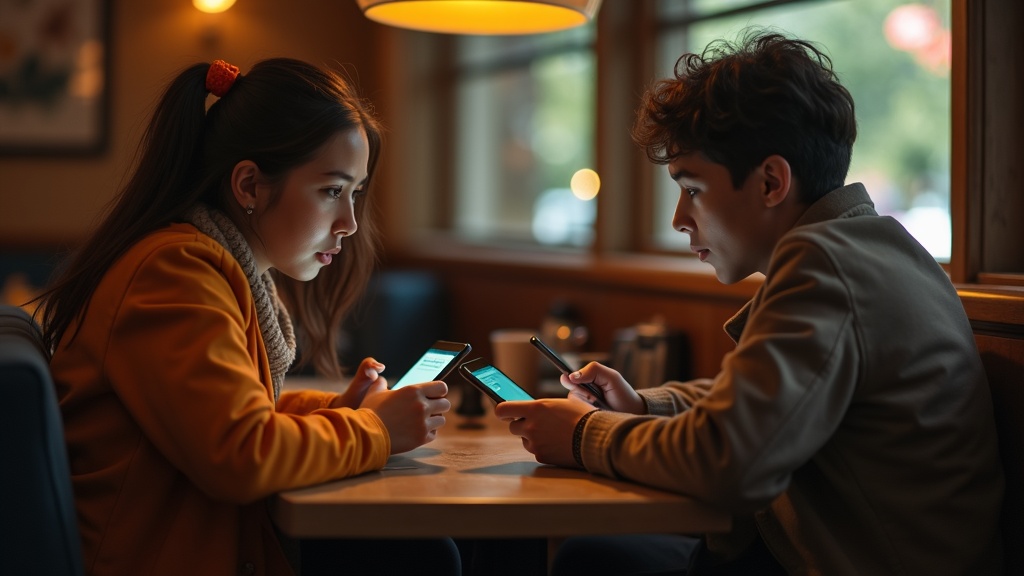
You craft the perfect text message, add a few emojis, maybe throw in some bold formatting to make your point. You hit send feeling pretty good about it. Then your friend replies with a screenshot, and you see what actually showed up on their phone. The emojis are question marks. Your carefully formatted text is just plain letters. Sometimes there are weird line breaks in places you never put them.
If this sounds familiar, you’re not imagining things. Your texts really do look different depending on who’s receiving them and what phone they’re using. It happens constantly, to everyone, and it’s surprisingly predictable once you know what’s going on.
The frustrating part is that it feels like it should just work. We’re all sending text messages in the same century, after all. But behind the scenes, your message is traveling through a patchwork of different technologies, each with its own rules about what it can and can’t display. Some phones speak different languages. Some messaging apps add features that others don’t recognize. And sometimes what looks perfect on your screen simply can’t be translated to someone else’s.
The good news is that most of these quirks aren’t random glitches or signs that something’s broken. They’re the result of specific, understandable differences in how phones and networks handle messages. Once you know what causes these formatting hiccups, you can work around them or at least stop wondering if you accidentally sent gibberish to everyone you know.
SMS, MMS, and chat features don’t carry formatting the same way
Not all text messages work the same way under the hood. When you hit send, your message might travel as a basic SMS, a picture-style MMS, or a newer chat-style message. Each of these handles formatting differently, which is why your carefully spaced message sometimes arrives as a jumbled mess.
SMS is the oldest and most reliable option. It’s the reason you can text pretty much anyone, even if they have a flip phone from 2005. But SMS was designed decades ago for plain text only. No bold, no colors, no fancy spacing. Just letters and numbers.
When you add a photo or emoji, your phone often switches to MMS instead. MMS can carry images and richer content, but it’s still pretty basic. Think of it like sending a postcard versus a letter—it gets there, but the format is fixed.
Newer chat features, like iMessage or RCS, work more like apps. They support read receipts, typing indicators, and better formatting. But they only work when both people have compatible systems. If one person doesn’t, the message gets converted back to basic SMS, and all that formatting gets stripped out.
Here’s another wrinkle: long SMS messages get split into chunks and reassembled on the other end. Sometimes that reassembly doesn’t perfectly recreate your line breaks or spacing. What looked like a nicely formatted paragraph on your screen might arrive as one long block of text. The message gets through, but the layout gets lost in translation.
Fonts, screen sizes, and text settings change line breaks
Ever sent someone a carefully formatted message, only to have them screenshot it back looking completely different? You’re not imagining things. The same exact text can wrap and break in totally different places depending on who’s reading it.
Here’s what’s happening. Your phone displays text using a specific font at a specific size on a screen with a specific width. Your friend’s phone might use a different font, show it bigger or smaller, and have a wider or narrower screen. Even if you both have the same phone model, one of you might have adjusted the text size in your settings to make things easier to read.
This matters more than you’d think. Imagine you send someone your address with each line separate: the street, city, and zip code all on their own lines. On your screen it looks neat and organized. On their phone, if the text is larger or the font is wider, those lines might wrap awkwardly or run together into a chunky block.
Or picture sending a short poem or a joke where the timing depends on the line breaks. What looks like three punchy lines on your display might become one long sentence on theirs, completely killing the effect.
The same thing happens with those messages where people use spaces or line breaks for emphasis. You might tap out something that looks perfectly spaced, but when it arrives, their larger font or narrower screen turns your careful formatting into something that looks nothing like what you sent.
There’s no real fix for this. Every phone handles text display slightly differently, and people adjust their settings based on what works for their eyes. Your perfectly formatted message is always just a suggestion.
Emoji support varies, so some symbols change or disappear
Here’s a frustrating scenario you’ve probably experienced: you send someone a cute emoji, and they text back asking what you meant because all they see is a blank square or a question mark. Or maybe they see something completely different from what you sent. This happens because not every phone has the same emoji collection installed.
Think of emojis like a language that gets new words added every year. Newer phones get regular updates that include the latest emojis, but older devices often get left behind. When you send an emoji that doesn’t exist on someone else’s phone, their device has to make a choice about what to display instead.
Sometimes it shows a generic placeholder, like an empty box or question mark. Other times, the phone tries to be helpful and swaps in something close to what you sent. That’s why your perfectly chosen emoji might arrive as something slightly off, or why a friend’s message seems to have random blank spots in it.
The same emoji can also look completely different across devices, even when both phones technically support it. An emoji that looks cheerful and friendly on your iPhone might appear more serious or cartoonish on someone’s Android phone. Each company designs their own versions, so the same symbol can have surprisingly different vibes.
This inconsistency affects how your messages come across. What seems like a lighthearted joke with a specific emoji might land differently if the person reading it sees a different image entirely. It’s one more reason why the texts you carefully compose don’t always look the same on the other end.
Your messaging app can change what gets sent and how it’s shown
Here’s something most people don’t realize: your messaging app isn’t just a window that shows your words. It’s actually making decisions about how to format and send them.
When you type a message, the app might be quietly changing things before it even leaves your phone. Many apps automatically convert straight quotation marks into curly ones. They turn regular hyphens into longer dashes. Some will fix your spacing without telling you, collapsing two spaces into one or cleaning up extra line breaks.
This gets especially tricky when you copy text from somewhere else and paste it into a message. Your app might strip out formatting, change special characters, or rearrange spacing to fit its own style. What looked perfect in your notes app might look completely different once it’s pasted into your messaging app.
The real confusion starts when your app and your friend’s app don’t agree on these rules. You might send a message with carefully spaced lines, but their app compresses everything together. Or you paste in a quote with nice curly quotes, and it arrives on their phone as random question marks or boxes.
That’s why what you see in your compose box isn’t always what arrives on the other end. Your app has already processed your text once before sending it. Then their app processes it again when displaying it. Each app is following its own playbook, and those playbooks don’t always match.